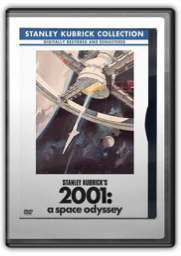

A daring experiment in unconventional narrative inspired by Arthur C Clarke's short story "The Sentinel", 2001: A Space Odyssey is a visual tone poem (barely 40 minutes of dialogue in a 139-minute film) that charts a phenomenal history of human evolution. When Stanley Kubrick recruited Clarke to collaborate on "the proverbial intelligent science fiction film", it's a safe bet neither the maverick auteur nor the great science fiction writer knew they would virtually redefine the parameters of the cinema experience with the result. From the dawn-of-man discovery of crude but deadly tools in the film's opening sequence to the journey of the spaceship Discovery and metaphysical birth of the "star child" at film's end, Kubrick's vision is meticulous and precise. In keeping with the director's underlying theme of dehumanisation by technology, the notorious, seemingly omniscient, computer HAL 9000 has more warmth and personality than the human astronauts it is supposedly serving. (The director also leaves the meaning of the black, rectangular alien monoliths open for discussion.) This theme, in part, is what makes 2001 a film like no other, though dated now that its post-millennial space exploration has proven optimistic compared to reality. Still, the film is timelessly provocative in its pioneering exploration of inner and outer-space consciousness. With spectacular, painstakingly authentic special effects that have stood the test of time, Kubrick's film is nothing less than a cinematic milestone—puzzling, provocative and perfect. —Jeff Shannon, Amazon.com 
Such a simple idea—yet so fiendishly complex in the execution. 24, as surely everyone knows by now, is a thriller that takes place over 24 hours, midnight to midnight, in 24 one-hour episodes (well, 45-minute episodes if you extract the ad breaks). Everything to take place in real time—on-screen and off-screen time the same—which means no flash-backs, no flash-forwards, no nice handy time-dissolves. Every strand of the plot has to be dovetailed and interlocked to make sure that things happen just when they should, in the right amount of time. Not that easy. 
Jack Bauer is having another one of his "very bad days" in the second series of the ground-breaking real-time thriller 24. Once again the hours are ticking by with more guaranteed cliffhangers than a convention of mountain climbers. Holed up in a Los Angeles condo and estranged from his daughter, Jack is no longer on the government payroll; unfortunately for him, this small fact doesn't seem to matter to President David Palmer and the NSA who call him back in to the CTU and give him 24 hours to infiltrate a terrorist organisation who are planning to detonate a dirty bomb in the city of angels. All Jack wants is to get his daughter out of the city, unfortunately Kim's new employer, the abusive father of the child she is nannying, has other ideas. 
Anti-vivisection activists make a very bad judgment call and release an experimental monkey infected with "rage". 28 Days Later..., as the title has it, bicycle messenger Cillian Murphy wakes up from a post-traffic accident coma in a deserted London hospital, ventures out to find the city depopulated and the few remaining normal people doing everything to avoid the jittery, savage, zombie-like "infecteds" who attack on sight. 
History will place an asterisk next to A.I. as the film Stanley Kubrick might have directed. But let the record also show that Kubrick—after developing this project for some 15 years—wanted Steven Spielberg to helm this astonishing sci-fi rendition of Pinocchio, claiming (with good reason) that it veered closer to Spielberg's kinder, gentler sensibilities. Spielberg inherited the project (based on the Brain Aldiss short story "Supertoys Last All Summer Long") after Kubrick's death in 1999, and the result is an astounding directorial hybrid. A flawed masterpiece of sorts, in which Spielberg's gift for wondrous enchantment often clashes (and sometimes melds) with Kubrick's harsher vision of humanity, the film spans near and distant futures with the fairy-tale adventures of an artificial boy named David (Haley Joel Osment), a marvel of cybernetic progress who wants only to be a real boy, loved by his mother in that happy place called home. 
Terence Stamp as a drag queen—an Aussie drag queen? Darling, you'd better believe it. In Stephan Elliott's delirious exercise in ultra-camp meets outback macho, Stamp plays an ageing trans-sexual who, with two of his equally high-glossed pals, heads off for a cabaret engagement in Alice Springs. Priscilla is their chosen vehicle, a school bus painted an outrageous purple. The culture-clash comedy that ensues is none too unpredictable: the local Ockers, initially contemptuous, soon find the spangled and bewigged trio can out-talk, out-drink and if necessary, out-punch them; everything ends in a warm glow of mutual tolerance and appreciation. Elliott maybe hits the feelgood button a little too hard, but it's impossible not to be swept along by the sheer brash energy of the film. The bitchy dialogue snaps and crackles, the costumes and Fellini-esque dance numbers are to die for, and Stamp and Co.—enjoying themselves no end—play the whole thing to the hilt and some way beyond it. —Philip Kemp 
This deluxe five-disc package shows off not only the merits of the films on offer but the wide possibilities of the DVD medium. Even if you're among the many that only rate two or three of the Alien films, this is still an essential purchase. (The jury is still out on the interesting-but-muddy Alien 3, directed by David Fincher—who went on to make Seven and Fight Club—while Alien: Resurrection by Jean-Pierre Jeunet of Delicatessen fame is the nearest the series has come to an ordinary movie.) 
From its first gliding aerial shot of a generic suburban street, American Beauty moves with a mesmerising confidence and acuity epitomised by Kevin Spacey's calm narration. Spacey is Lester Burnham, a harried Everyman whose midlife awakening is the spine of the story, and his very first lines hook us with their teasing fatalism—like Sunset Boulevard's Joe Gillis, Burnham tells us his story from beyond the grave. It's an audacious start for a film that justifies that audacity. Weaving social satire, domestic tragedy and whodunit into a single package, Alan Ball's first theatrical script dares to blur generic lines and keep us off balance, winking seamlessly from dark, scabrous comedy to deeply moving drama. The Burnham family joins the cinematic short-list of great dysfunctional American families, as Lester is pitted against his manic, materialistic realtor wife, Carolyn (Annette Bening, making the most of a mostly unsympathetic role) and his sullen, contemptuous teenaged daughter, Jane (Thora Birch, utterly convincing in her edgy balance of self-absorption and wistful longing). Into their lives come two catalytic outsiders. A young cheerleader (Mena Suvari) jolts Lester into a sexual epiphany that blooms into a second adolescence. And an eerily calm young neighbour (Wes Bentley) transforms both Lester and Jane with his canny influence. Credit another big-screen newcomer, English theatrical director Sam Mendes, with expertly juggling these potentially disjunctive elements into a superb ensemble piece that achieves a stylised pace without lapsing into transparent self-indulgence. Mendes has shrewdly insured his success with a solid crew of stage veterans, yet he has also made an inspired discovery in Bentley, whose Ricky Fitts becomes a fulcrum for both plot and theme. Cinematographer Conrad Hall's sumptuous visual design further elevates the film, infusing the beige interiors of the Burnhams' lives with vivid bursts of deep crimson, the colour of roses—and of blood. —Sam Sutherland 
Anyone who's watched just about any teenage film knows that the greatest evil in this world isn't chemical warfare, ethnic cleansing, or even the nuclear bomb. The worst crime known to man? Why, virginity, of course. As we've learned from countless films—from Summer of '42 to Risky Business—virginity is a criminal burden that one must shed oneself of as quickly as possible. And while many of these films have given the topic a bad name, American Pie quietly sweeps in and gives sex some of its dignity back. Dignity, you may say? How can a film that highlights intercourse with fruit pies, premature ejaculation broadcast across the Internet and the gratuitous "gross-out" shots restore the dignity of a genre that's been encumbered with such heavyweights as Porky's and Losin' It? The plot of American Pie may be typical, with four high-school friends swearing to "score" before the prom, yet the film rises above the muck with its superior cast, successful and sweet humour and some actually rather retro values about the meaning and importance of sex. Jason Biggs, Chris Klein, Thomas Ian Nicholas, and Eddie Kaye Thomas make up the odd quartet of pals determined to woo, lie and beg their way to manhood. The young women they pursue are wary girlfriend Vicky (Tara Reid), choir girl Heather (Mena Suvari), band geek Michelle (Alyson Hannigan) and just about any other female who is willing and able. Natasha Lyonne as Jessica, playing a similar role as in Slums of Beverly Hills, is the general advisor to the crowd (when Vicky tells her "I want it to be the right time, the right place," Jessica responds, "It's not a space shuttle launch, it's sex"). The comedic timing hits the mark—especially in the deliberately awkward scenes between Jim (Biggs) and his father (Eugene Levy). And, of course, lessons are learned in this genuinely funny film, which will probably please the adult crowd even more than it will the teenage one. —Jenny Brown 
Taking the Spin-off genre to the extreme, Angel attempts to replicate the success of Buffy by taking the heartthrob as the lead. Spin-off shows rarely match the success of their parent programmes, especially in the superhero/fantasy genre (cf. The Girl From UNCLE, The Bionic Woman, The Green Hornet—Frasier being the notable exception). Characters who were perfectly useful as supporting figures dwindle when forced in the spotlight, and Angel takes a special risk by building an entire series around a character who is: (a) supposed to be a mystery man; (b) a vampire who once spent half a season of Buffy the Vampire Slayer as a dastardly villain who killed without remorse; and (c) played by David Boreanaz, who is well up on handsome and broody but still can't do an Irish accent to save his life and is visibly learning this acting lark as the series progresses. 
It is with this second series that Angel, the darker Los Angeles mean-streets spin-off from Buffy, comes entirely into its own. Angel, the vampire with a soul and rather too much hair gel, is driven partly by his need for atonement and partly by his anger at the manipulations of the satanic law firm Wolfram and Hart, especially the morally equivocal Lindsey (Christian Kane). At the end of the previous season, they set his emotional destruction in motion by bringing back from hell Darla, the vampire who turned him, whom he loved for centuries and then killed to save Buffy. Julie Benz's soft-voiced passion——"God doesn't want you, but I still do"—makes her a perfect tragic foil for David Boreanaz's "billowy coat King of Pain" hero and mid-season offers further cause for Angel's despairing rage at his failure to save Darla from being turned vampire again. 
In the third series of Angel the titular vampire with a soul was forced to stand alone thanks to the (temporary) death of his beloved Buffy and her show's move to a new network, with no crossover between the two allowed. He returns from seeking peace in a demon-haunted monastery to find the LA Angel Investigations team fighting supernatural crime in his absence. Fred is still haunted by the nightmare dimension from which they rescued her; Cordelia's visions get ever more painful and debilitating. The schemes of the evil law firm Wolfram and Hart become every more imaginative and dragon lady Lilah Morgan becomes even more of an enemy when lusting after Angel. Unbelievably, Darla, Angel's vampire sire and lover, turns up, pregnant with his child and is tortured by inexplicable motherly feelings as well as a raging thirst for human blood. 
As the fourth series of Angel starts, everything is still as we left it: Angel has been sunk to the bottom of the sea in an iron box by his inexplicable and vindictive son Connor and Cordelia has been summoned to higher realms to await orders. Gunn and Fred are left in the Hyperion Hotel, unsure about what has happened to their friends, and Lilah is working hard to seduce Wesley to the dark side. In the first few episodes, some of this is resolved but it's almost immediately replaced by far worse crises: prophesies of doom accumulate more rapidly even than usual in this wonderfully gloomy show and a horned rock-like Beast rains fire on Los Angeles. This last year is Angel's most tightly dramatic season yet—with a story arc of surprising intensity punctuated by the show's usual wit and sexiness. 
This 1998 testosterone-saturated blow-'em-up from producer Jerry Bruckheimer and director Michael Bay (The Rock, Bad Boys) continued Hollywood's millennium-fuelled fascination with the destruction of our planet. There's no arguing that the successful duo understand what mainstream audiences want in their blockbuster movies—loads of loud, eye-popping special effects, rapid-fire pacing, and patriotic flag waving. Bay's protagonists—the eight crude, lewd, oversexed (but, of course, lovable) oil drillers summoned to save the world from a Texas-sized meteor hurling toward the earth—are not flawless heroes, but common men with whom all can relate. In this huge Western-in-space soap opera, they're American cowboys turned astronauts. Sci-fi buffs will appreciate Bay's fetishising of technology, even though it's apparent he doesn't understand it as anything more than flashing lights and shiny gadgets. Smartly, the duo also try to lure the art-house crowd, raiding the local indie acting stable to populate the film with guys like Steve Buscemi, Billy Bob Thornton, Owen Wilson, and Michael Duncan, all adding needed touches of humour and charisma. 
This Audrey Hepburn Collection box set contains the following films: Breakfast at Tiffany's, Sabrina, Funny Face, Paris When It Sizzles and Roman Holiday. 
In the gap between seasons four and five of Babylon 5, fans suffering withdrawal symptoms were sated by this first TV movie. As a prequel to the series' timeline, creator J. Michael Straczynski had an awful lot of continuity to consider. Amazingly, there's only one inconsistency throughout (a matter of who met whom and when), making this an essential part of the overall storyline. The tale is told cleverly from the future as the remembrances of Londo (Peter Jurasik), who is now Emperor of a dying Centauri homeworld. He looks back at the beginnings of the Earth-Minbari war and links together many clues strewn throughout the shows' early years. We see exactly how Delenn contributed to the first blows, the death of dignitary Dukhat, and most importantly what really happened to Sinclair (Michael O'Hare) at the Battle of the Line. The FX showcased by the battle are genuinely spectacular, but overshadowed by the make-up department which had the thankless task of making everyone look younger. Their best success is on an uncredited Claudia Christian who appears as an 18-year-old Susan Ivanova dealing with the death of her brother. Being a prequel there's little in the way of a surprise finale, but there's plenty of intrigue along the way. —Paul Tonks 
We were promised that it would all end "in fire". Maybe at the end of its five-year run Babylon 5 fulfilled that promise for some viewers, but the announcement that a spin-off series, Crusade would serve to complete story threads moved the goalposts for most. It was a brave idea to attempt bridging the segue into Crusade via this fourth TV movie, but after the ending given by the episode "Sleeping in Light", the timing seems a little last-minute. Bruce Boxleitner gives one last greyed-up and chiselled performance as Sheridan—now President of the new Alliance. Overseeing an unveiled fleet of prototype Victory Destroyer ships, he receives visions offering warning about a lingering danger despite the end of the Shadow War. Though advised and manipulated by Technomage Galen (Peter Woodward), Sheridan is still unable to prevent the unleashing of the Drakh's last Planet Killer weapon. Infused in Earth's atmosphere, this plague will take five years to go "live" and then kill every last human. So begins the premise for the new show. It's a little too incomplete to satisfy as an individual movie. Watching it in conjunction with "War Zone" (the Crusade pilot episode) will give a better understanding of what's motivating everyone. —Paul Tonks 
Captain John Sheridan (Bruce Boxlietner) arrives on Babylon 5 in the first episode of the second series, "Points of Departure", which marks the handing over of command of B5 to Sheridan from Commander Jeffery Sinclair (actor Michael O'Hare had become a victim of studio politicians who wanted a bigger star in the leading role). This excellent instalment also reveals more about why the Minbari surrendered to Earth at the Battle of the Line when they were on the verge of victory. "Revelations" explains that Sheridan's wife, Anna, died during an archaeological survey of the world Z'ha'dum, the name being just one of many oblique references to Tolkien's The Lord of the Rings. "The Geometry of Shadows" introduces the Technomages, characters who featured more significantly in the ill-fated spin-off series Crusade (1999), while "The Coming of Shadows" proved to be Babylon 5's finest hour. The story of political intrigue foreshadowing the fate of two of the major characters won the Hugo award for the Best Dramatic Presentation at the 1996 World Science Fiction Convention and proved so powerful that J Michael Straczynski included it in his Complete Book of Scriptwriting. 
"Matters of Honour" launches the third series of Babylon 5 with the introduction of the White Star, a spacecraft added to enable more of the action to take place away from the static space station. Also introduced is Marcus Cole (Jason Carter) who, in another nod to The Lord of the Rings, is a Ranger not so far removed from JRR Tolkien's Strider. In "Voices of Authority" the show finds an epic scale as Ivanova seeks the mysterious "First Ones" for allies against the Shadows, and evidence is discovered pointing to the truth behind President Santiago's assassination. A third of the way through the series "Messages from Earth", "Point of No Return" and "Severed Dreams" prove pivotal, changing the nature of the story in a way previously unimaginable on network TV. Earth slides into dictatorship, the fascistic Nightwatch takes control of off-world security and Sheridan takes decisive action by declaring Babylon 5 independent. 
The fourth series of Babylon 5 begins on a high point with Centauri Prime in the grip of the insane Emperor Cartagia (Wortham Krimmer) and a run of six shows leading to the climax of the war against the Shadows in "Into the Fire". If this colossal narrative is resolved a little too easily and the ultimate aim of the Shadows turns out to be a tad disappointing, it's still one of the most powerful slices of space opera ever to grace the small screen. 
"The Gathering", the feature-length pilot episode for Babylon 5, still ranks amongst the best of introductions to any TV science fiction show. In 1993 there was just nothing else to compare with its wall-to-wall CGI effects backed up by eye-popping architectural and interior production design, costumes, alien make-up and hairstyles. A couple of flat performances let down an otherwise intriguingly cast ensemble, but these problems would vanish in the series. Here, character introduction and development was refreshingly left to fend for itself within an elaborate narrative structure that kicked-off several plot threads at once. Creator Michael Straczynski ambitiously starts proceedings with a multi-layered mystery concerned with the nature and destiny of the soul. Political shenanigans, trigger-happy action stereotypes and wavering physics linger in the viewer's memory, but the tantalising tale told by smooth Commander Sinclair (Michael O'Hare) about the "hole in his mind" makes the strongest impression. Considering how convoluted the show's mysteries would become, "The Gathering" remains an essential starting point. 
Despite voluminous protest and nitpicking criticism from loyal fans of the original TV series (1978-80), the 2003 version of Battlestar Galactica turned out surprisingly well for viewers with a tolerance for change. Originally broadcast on the Sci-Fi Channel in December 2003 and conceived by Star Trek: The Next Generation alumnus Ronald D Moore as the pilot episode for a "reimagined" TV series, this four-hour mini series reprises the basic premise of the original show while giving a major overhaul to several characters and plot elements. Gone are the flowing robes, disco-era hairstyles, and mock-Egyptian fighter helmets, and thankfully there's not a fluffy "Daggit" in sight... at least, not yet. Also missing are the "chrome toaster" Cylons, replaced by new, more formidable varieties of the invading Cylon enemy, including "Number Six" in hot red skirts and ample cleavage, who tricks the human genius Baltar! into a scenario that nearly annihilates the human inhabitants of 12 colonial worlds. 
Battlestar Galactica's Edward James Olmos wasn't kidding when he said "the series is even better than the miniseries." As developed by sci-fi TV veteran Ronald D. Moore, the "reimagined" BG is exactly what it claims to be: a drama for grown-ups in a science-fiction setting. The mature intelligence of the series is its greatest asset, from the tenuous respect between Galactica's militarily principled commander Adama (Olmos) and politically astute, cancer-stricken colonial President Roslin (Mary McDonnell) to the barely suppressed passion between ace Viper pilot "Apollo" (a.k.a. Adama's son Lee, played by Jamie Bamber) and the brashly insubordinate Starbuck (Katee Sackhoff), whose multifaceted character is just one of many first-season highlights. Picking up where the miniseries ended, season 1 opens with the riveting, Hugo Award-winning episode "33," in which Galactica and the "ragtag fleet" of colonial survivors begin their quest for the legendary 13th colony planet Earth, while being pursued with clockwork regularity by the Cylons, who've now occupied the colonial planet of Caprica. The fleet's hard-fought survival forms (1) the primary side of the series' three-part structure, shared with (2) the apparent psychosis of Dr. Gaius Baltar (James Callis) whose every thought and move are monitored by various incarnations Number Six (Tricia Helfer), the seemingly omniscient Cylon ultravixen who follows a master plan somehow connected to (3) the Caprican survival ordeal of crash-landed pilots "Helo" (Tahmoh Penikett) and soon-to-be-pregnant "Boomer" (Grace Park), whose simultaneous presence on Galactica is further evidence that 12 multicopied models of Cylons, in human form, are gathering their forces. 
Let's get straight to the point: bar none, Battlestar Galactica is the best science fiction television programme currently showing. In fact, let's go further. It's the best of the last decade. And truthfully? You'd find very few sci-fi fans who'd disagree. 
While too many films suffer the fate of creative bankruptcy, Being John Malkovich is a refreshing study in contrast, so bracingly original that you'll want to send director Spike Jonze and screenwriter Charlie Kaufman a thank-you note for restoring your faith in the enchantment of film. Even if it ultimately serves little purpose beyond the thrill of comedic invention, this demented romance is gloriously entertaining, spilling over with ideas that tickle the brain and even touch the heart. That's to be expected in a movie that dares to ponder the existential dilemma of a forlorn puppeteer (John Cusack) who discovers a metaphysical portal into the brain of actor John Malkovich. 
Bill & Ted's Bogus Journey is ample proof that not all sequels suck. Sometimes they're even better than the original. It is the future. Society has at last solved all its major problems, thanks to amiable lunkheads Bill and Ted and the inspiring music of their band, Wyld Stallyns. Only one man is dissatisfied with the way things have turned out, the evil De Nomolos (Joss Ackland). In an effort to change the future, De Nomolos sends evil Bill and Ted robots back in time to prevent the real Bill and Ted from winning a pivotal Battle of the Bands. What follows is a spirited journey through the afterlife as Bill and Ted try to rescue their girlfriends, save the future, and, oh, yeah, learn how to play the guitar. 
Time travel in the movies is at an all time high in Bill & Ted's Excellent Adventure. Bill S Preston Esquire (Alex Winter) and Ted Theodore Logan (Keanu Reeves) are in danger of flunking History class. They're rescued by Rufus (George Carlin), a resident of San Dimas 700 years in the future—a future in which their band Wyld Stallyns has brought about world peace and the best water slides in the universe. Entrusted with a phone booth time machine, they pick up various historical personages to give a colourful stage show for their final exam. The hip 80s rock sensibility paved the way for many comedies that followed Wayne's World, with air guitar and phrases like "bogus" and "dude" entrenching themselves way beyond the film's cult following. The film spawned a number of spin-offs including a bodacious cartoon and comic book series. 
To call this cut of Blade Runner `long awaited' would be a heavy, heavy understatement. It's taken 25 years since the first release of one of the science-fiction genre's flagship films to get this far, and understandably, Blade Runner: The Final Cut has proved to be one of the most eagerly awaited DVD releases of all time. 
The Blues Brothers: John Belushi and Dan Aykroyd—as "legendary" Chicago brothers Jake and Elwood Blues—brought their "Saturday Night Live" act to the big screen in this action-packed hit from 1980. As Jake and Elwood struggle to reunite their old band and save the Chicago orphanage where they were raised, they wreak enough good-natured havoc to attract the entire Cook County police force. The result is a big-budget stunt-fest on a scale rarely attempted before or since, including extended car chases that result in the wanton destruction of shopping malls and more police cars than you can count. Along the way there's plenty of music to punctuate the action, including performances by Ray Charles, Aretha Franklin, Cab Calloway and James Brown that are guaranteed to knock you out. Keep an eye out for Steven Spielberg as the city clerk who stamps some crucial paperwork near the end of the film. 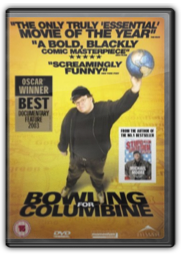
An Oscar-winning documentary based around a 1999 massacre at an American High School in Colorado, Bowling for Columbine is filmmaker Michael Moore's take on the culture of firearms violence that is, apparently, peculiar to the USA. Significantly, this is no detective investigation into the psychology and motives of the two students who randomly opened fire on their classmates, killing 12 of them—Moore regards such particulars as practically irrelevant—rather, it's an attempt to counter the moral panic and right-wing diagnoses that followed the massacre, with the likes of rock star Marilyn Manson blamed by some. 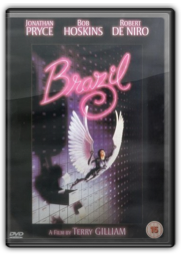
If Franz Kafka had been an animator and film director—oh, and a member of Monty Python's Flying Circus—this is the sort of outrageously dystopian satire one could easily imagine him making. However, Brazil was made by Terry Gilliam, who is all of the above except, of course, Franz Kafka. Be that as it may, Gilliam sure captures the paranoid-subversive spirit of Kafka's The Trial (along with his own Python animation) in this bureaucratic nightmare-comedy about a meek governmental clerk named Sam Lowry (Jonathan Pryce) whose life is destroyed by a simple bug. Not a software bug, a real bug (no doubt related to Kafka's famous Metamorphosis insect) that gets smooshed in a printer and causes a typographical error unjustly identifying an innocent citizen, one Mr. Buttle, as suspected terrorist Harry Tuttle (Robert De Niro). When Sam becomes enmeshed in unravelling this bureaucratic glitch, he himself winds up labelled as a miscreant. 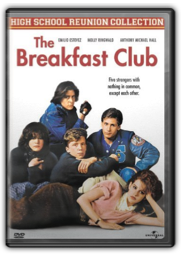
John Hughes's popular 1985 teen drama finds a diverse group of high school students—a jock (Emilio Estevez), a metalhead (Judd Nelson), a weirdo (Ally Sheedy), a princess (Molly Ringwald), and a nerd (Anthony Michael Hall)—sharing a Saturday in detention at their high school for one minor infraction or another. Over the course of a day, they talk through the social barriers that ordinarily keep them apart, and new alliances are born, though not without a lot of pain first. Hughes (Ferris Bueller's Day Off), who wrote and directed, is heavy on dialogue but he also thoughtfully refreshes the look of the film every few minutes with different settings and original viewpoints on action. The movie deals with such fundamentals as the human tendency toward bias and hurting the weak, and because the characters are caught somewhere between childhood and adulthood, it's easy to get emotionally involved in hope for their redemption. Preteen and teenage kids love this film, incidentally. —Tom Keogh, Amazon.com 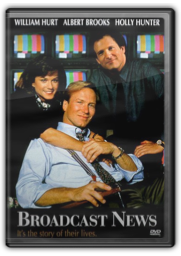
Holly Hunter plays a network news producer who, much to her chagrin, finds herself falling for pretty-boy anchorman William Hurt. He is all glamour without substance and represents a hated shift from hard news toward packaged "infotainment", which Hunter despises. Completing the triangle is Albert Brooks, who provides contrast as the gifted reporter with almost no presence on camera. He carries a torch for Hunter; she sees merely a friend. Written and directed by James L. Brooks, Broadcast News shows remarkable insight into the people who make television. On the surface the film is about that love triangle. If you look a little deeper, however, you will see that this behind-the-scenes comedy is a very revealing look at obsessive behaviour and the heightened emotions that accompany adrenaline addiction. It is for good reason this was nominated for seven Academy Awards (though it did not win any). There are scenes in this movie you cannot shake, such as Hunter's scheduled mini-breakdowns, or Brooks' furious "flop sweat" during his tryout as a national anchor. Watch for an uncredited Jack Nicholson as a senior newscaster. —Rochelle O'Gorman 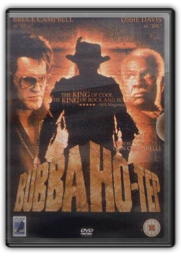
Don Coscarelli directs and Bruce Campbell stars as the King of Camp in this intentionally over-the-top schlockfest. Bubba Ho-Tep is partially about Elvis Presley and partially about the title character, an Egyptian cowboy zombie, but mostly it is about camp. The movie is equal parts story and back story. We learn through narration and flashback how Elvis didn't really die, ending up instead in a rest home in East Texas with JFK (played by Ossie Davis), who was dyed black and had his brain removed, presumably for reasons of national security. Campbell and Davis realize that something strange is going on when their rest-home compatriots start dropping off suspiciously. The whole movie leads up to a final showdown to the death with the Egyptian cowboy zombie who has been sucking the souls of their fellow residents because he thought no one would notice. The movie unfolds a bit slowly; it is, after all, a geriatrics-fight-Egyptian-cowboy-zombie movie. However, one wishes this self-conscious movie's pacing took its cue from the atypically fast-moving zombie instead of from the senior-citizen Elvis and JFK. In the end, though, Campbell is flawless as the aged King; his accent, intonations, glasses, and trademark karate are at the same time sincere and over the top. —Brian Saltzman 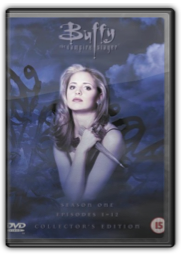
Vampire-slayer Buffy Summers moves to Sunnydale, a Californian community located above the "Hellmouth", a phenomenon which explains the local graveyard's overpopulation of vampires and other supernatural beings. Angel, a mysterious loiterer, starts flirting with Buffy and gives her helpful tips on how to cope with the local nasties. However, he turns out to be a vampire, which complicates the future of their relationship. Buffy makes friends with school outcasts Willow, a computer nerd, and geeky Xander. But she excites the enmity of high-school princess Cordelia. The season's prime villain is the Master, a Nosferatu-looking vampire lurking under the town. Giles, Buffy's mentor, looks things up in books and demonstrates the exact same look of puzzlement actor Anthony Head used to demonstrate in those horrifying instant coffee ads. —Kim Newman 
After the first season of Buffy The Vampire Slayer became a ratings success the show was renewed with a bigger budget and twice as many episodes. Seeds are sown through the early episodes for many of the stunning plot developments later in the season: there's a slow burn for the relationships building between Buffy and Angel (no surprise), Giles and Jenny (nice surprise), and Xander and Cordelia (huge surprise). Most importantly, we're introduced to important semi-regulars Spike and Drusilla ("School Hard"), Oz ("Inca Mummy Girl") and fellow Slayer Kendra ("What's My Line Part 1"). Their appearances tackle youth issues such as sibling rivalry, sexual maturity and rejection. 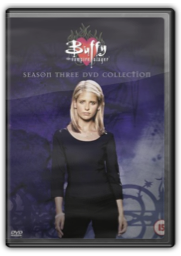
Action-packed Season Three develops major characters and plot lines brewing over the last couple of years. The Mayor, this season's major baddie, wants to become an invincible demon by slaughtering everyone at Sunnydale High's graduation ceremony but he's going to torture them all by giving his speech first. Bad-girl vampire-slayer Faith wants to get one over on Buffy and becomes even more rotten. Angel comes back from hell but isn't sure what to do about his girlfriend. Willow meets her evil gay vampire duplicate from another dimension. Xander loses his virginity but still has to contemplate his essential uselessness. Cordelia gets less whiny and has to work in a dress-shop when her father becomes bankrupt. Giles wears tweed and drinks tea, though it is revealed that he used to be a warlock and in a punk band. Besides the soap opera, there are monsters, curses and vampires (inevitably). —Kim Newman 
In its fourth season, Buffy the Vampire Slayer had to change its formula radically. Two major characters—the vampire-with-a-soul Angel and Cordelia, the queen bitch of Sunnydale High—had gone off to be in their own show, Angel, and soon after the start of the season Willow's werewolf boyfriend Oz left when Seth Green needed to concentrate on his film career. Buffy and Willow started college, where they met new characters like Riley, the All-American Boy with a double life, and Tara, the sweet stuttering witch; but Xander and Giles found themselves at something of a loose end. Several characters were subjected to the radical re-envisioning possible in a show that deals with the supernatural: the blond vampire Spike came back and soon found himself with an inhibitor chip in his head, forced into reluctant alliance with Buffy; the former vengeance demon Anya became passionately smitten with Xander. 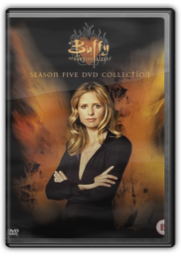
The fifth season of Buffy the Vampire Slayer is about illusions and the truth that they often reveal; suddenly Buffy has a younger sister, has always had a younger sister. Michelle Trachtenberg as the moody, gawky Dawn achieves the considerable triumph of walking into an established stock company of well-known characters—Xander, Willow, Giles and so on—with the perfect assurance of a long-term member of the cast. Of course, nothing is as it seems; even Glory, the mad brain-sucking beauty in a red dress who is the villain of the year, turns out to be even more than she seems. Sarah Michelle Gellar as Buffy manages to convey heartbreak, self-involvement and real heroism as her relationship with her emotionally dense soldier boyfriend Riley hits the shoals and the blonde vampire Spike starts to show an altogether inappropriate interest. 
The seventh and final series of Buffy the Vampire Slayer begins with a mystery: someone is murdering teenage girls all over the world and something is trying hard to drive Spike mad. Buffy is considerably more cheerful in these episodes than we have seen her during the previous year as she trains Dawn and gets a job as student counsellor at the newly rebuilt Sunnydale High. Willow is recovering from the magical addiction which almost led her to destroy the world, but all is not yet well with her, or with Anya, who has returned to being a Vengeance demon in "Same Time, Same Place" and "Selfless", and both women are haunted by their decisions. 
The sixth series of Buffy the Vampire Slayer followed the logic of plot and character development into some gloomy places. The year begins with Buffy being raised from the dead by the friends who miss her, but who fail to understand that a sacrifice taken back is a sacrifice negated. Dragged out of what she believes to have been heavenly bliss, she finds herself "going through the motions" and entering into a relationship with the evil, besotted vampire Spike just to force her emotions. |
Cabaret is one of those film musicals whose cultural and stylistic influence extend well beyond the cinema. It confirmed Bob Fosse's status as one of the boldest choreographers of the 20th century and gave Liza Minnelli an early peak in a film career which would never scale such heights again. Minnelli is both the film's strength—on its own merits her performance is an Oscar-winning tour de force—and weakness. The real Sally Bowles was a third-rate performer and just one of a rich gallery of characters; here, the constant allowances for Minnelli's star turns and mannerisms ultimately throw the story off balance. But the source material is impeccable: Kander and Ebb's stage show, based on the autobiographical stories of Christopher Isherwood, has long since been acknowledged a classic. The songs, augmented by some new numbers in the film, are ageless. 
There's an extra coat of hot wax on Pixar's vibrant, NASCAR-influenced comedy about a world populated entirely by cars. Lightning McQueen (voiced by Owen Wilson) is the slick rookie taking the Piston Cup series by storm when the last race of the season (the film's high-octane opening) ends in a three-way tie. On the way to the tie-breaker race in California, Lightning loses his way off Route 66 in the Southwest desert and is taught to stop and smell the roses by the forgotten citizens of Radiator Springs. It's odd to have such a slim story from the whizzes of Pixar, and the film pales a bit from their other films (though can that be a fair comparison?). 
The most successful invigoration of a cinematic franchise since Batman Begins, Casino Royale offers a new Bond identity. Based on the Ian Fleming novel that introduced Agent 007 into a Cold War world, Casino Royale is the most brutal and viscerally exciting James Bond film since Sean Connery left Her Majesty's Secret Service. Meet the new Bond; not the same as the old Bond. Daniel Craig gives a galvanising performance as the freshly minted double-0 agent. Suave, yes, but also a "blunt instrument," reckless and possessed with an ego that compromises his judgment during his first mission to root out the mastermind behind an operation that funds international terrorists. In classic Bond film tradition, his global itinerary takes him to far-flung locales, including Uganda, Madagascar, the Bahamas (that's more like it) and Montenegro, where he is pitted against his nemesis in a poker game, with hundreds of millions in the pot. The stakes get even higher when Bond lets down his armour by falling in love with Vesper (Eva Green), the ravishing banker's representative fronting him the money. 
Schizoid serial killer Carl Stargher (Vincent D'Onofrio) has been captured at last, but a neurological seizure has rendered him comatose, and FBI agent Peter Novak (Vince Vaughan) has no way to determine the location of Stargher's latest and still-living victim. To probe the secrets contained in Stargher's traumatised psyche, the FBI recruits psychologist Catherine Deane (Jennifer Lopez), who has mastered a new technology that allows her to enter the mind of another person. What she finds in Stargher's head is a theatre of the grotesque, which, as envisioned by first-time director Tarsem Singh, is a smorgasbord of the surreal that borrows liberally from the Brothers Quay, Czech animator Jan Svankmajer, Hieronymous Bosch, Salvador Dali and a surplus of other cannibalised sources. 
Writer-director Kevin Smith (Clerks) makes a huge leap in sophistication with this strong story about a comic-book artist (Ben Affleck) who falls in love with a lesbian (Joey Lauren Adams) and actually gets his wish that she love him, too. Their relationship is attacked, however, by his business partner (Jason Lee), who pulls a very unsubtle Iago act to cast doubt over the whole affair. The film has the same sense of insiderness as Clerks—this time, Smith takes us within the arcane, funny world of comic-book cultism—but the themes of jealousy, deceit and the high price of growing up enough to truly care for someone make this a very satisfying movie. —Tom Keogh 
Adapted from the long-running stage version, this big-screen Chicago is a non-stop singing and dancing extravaganza that may well herald the welcome revival of the film musical. When the part-time lover of wannabe star Roxie (Renee Zellweger) is murdered, she is banged up with Chicago's most famous singing murderess, Velma (Catherine Zeta-Jones). They compete for the attention of the best lawyer in town, Billy Flynn (Richard Gere). Drawn to the special angle of Roxie's case (the sweetest killer to hit Chicago), Flynn offers her a taste of stardom and her daydreams of singing on stage are juxtaposed with the action. 
Presenting a bleak, harrowing, and yet ultimately hopeful vision of humankind's not-too-distant future, Children of Men is a riveting cautionary tale of potential things to come. Set in the crisis-ravaged future of 2027, and based on the atypical novel by British mystery writer P.D. James, the anxiety-inducing, action-packed story is set in a dystopian England where humanity has become infertile (the last baby was born in 2009), immigration is a crime, refugees (or "fugees") are caged like animals, and the world has been torn apart by nuclear fallout, rampant terrorism, and political rebellion. In this seemingly hopeless landscape of hardscrabble survival, a jaded bureaucrat named Theo (Clive Owen) is drawn into a desperate struggle to deliver Kee (Clare-Hope Ashitey), the world's only pregnant woman, to a secret group called the Human Project that hopes to discover a cure for global infertility. 
*Spoiler alert* 
Bigger isn't always better, but for anyone who enjoyed Pitch Black, a nominal sequel like The Chronicles of Riddick should prove adequately entertaining. Writer-director David Twohy returns with expansive sets, detailed costumes, an army of CGI effects artists, and the star he helped launch—Vin Diesel—bearing his franchise burden quite nicely as he reprises his title role. The Furian renegade Riddick has another bounty on his head, but when he escapes from his mercenary captors, he's plunged into an epic-scale war waged by the Necromongers. A fascist master race led by Lord Marshal (Colm Feore), they're determined to conquer all enemies in their quest for the Underverse, the appeal of which is largely unexplained (since Twohy is presumably reserving details for subsequent "chronicles"). With tissue-thin plotting, scant character development, and skimpy roles that waste the talents of Thandie Newton (as a Necromonger conspirator) and Judi Dench (as a wispy "Elemental" priestess), Twohy's back in the B-movie territory he started in (with The Arrival), brought to vivid life on a vast digital landscape with the conceptual allure of a lavish graphic novel. But does Riddick have leadership skills on his resumé? To get an answer to that question, sci-fi fans will welcome another sequel. —Jeff Shannon 
Con Air is proof that the slick, absurdly overblown action formula of Hollywood mega-producers Don Simpson and Jerry Bruckheimer (Top Gun, Days of Thunder, The Rock, Crimson Tide) lives on, even after Simpson's druggy death. (Read Charles Fleming's exposé, High Concept: Don Simpson and the Hollywood Culture of Excess, for more about that). Nicolas Cage, sporting a disconcerting mane of hair, is a wrongly convicted prisoner on a transport plane with a bunch of infamously psychopathic criminals, including head creep Cyrus the Virus (John Malkovich), black militant Diamond Dog (Ving Rhames), and serial killer Garland Greene (Steve Buscemi, making the most of his pallid, rodent-like qualities). Naturally, the convicts take over the plane; meanwhile, on the ground, a US marshal (John Cusack)and a DEA agent (Colm Meaney), try to figure out what to do. As is the postmodern way, the movie displays a self-consciously ironic awareness that its story and characters are really just excuses for a high-tech cinematic thrill ride. Best idea: the filmmakers persuaded the owners of the legendary Sands Hotel in Las Vegas to let them help out with the structure's demolition by crashing their plane into it.—Jim Emerson 
The opening and closing moments of Robert (Forrest Gump) Zemeckis's Contact astonish viewers with the sort of breathtaking conceptual imagery one hardly ever sees in movies these day—each is an expression of the heroine's lifelong quest (both spiritual and scientific) to explore the meaning of human existence through contact with extraterrestrial life. The movie begins by soaring far out into space, then returns dizzyingly to earth until all the stars in the heavens condense into the sparkle in one little girl's eye. It ends with that same girl as an adult (Jodie Foster)—her search having taken her to places beyond her imagination—turning her gaze inward and seeing the universe in a handful of sand. Contact traces the journey between those two visual epiphanies. Based on Carl Sagan's novel, Contact is exceptionally thoughtful and provocative for a big-budget Hollywood science fiction picture, with elements that recall everything from 2001 to The Right Stuff. Foster's solid performance (and some really incredible alien hardware) keep viewers interested, even when the story skips and meanders, or when the halo around the golden locks of rising-star-of-a-different-kind Matthew McConaughey (as the pure-Hollywood-hokum love interest)reaches Milky Way-level wattage. Ambitious, ambiguous, pretentious, unpredictable—Contact is all of these things and more. Much of it remains open to speculation and interpretation but whatever conclusions one eventually draws, Contactdeserves recognition as a rare piece of big-budget studio film making on a personal scale. —Jim Emerson 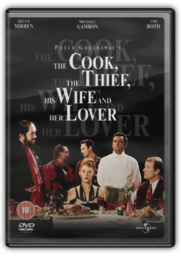
The Cook, the Thief, His Wife and Her Lover is both adored and detested for its combination of sumptuous beauty and revolting decadence. Few directors polarise audiences in the same way as Peter Greenaway, a filmmaker as influenced by Jacobean revenge tragedy and 17th-century painting as by the French New Wave. A vile, gluttonous thief (Michael Gambon) spews hate and abuse at a restaurant run by a stoic French cook (Richard Bohringer), but under the thief's nose his wife (the ever-sensuous Helen Mirren) conducts an affair with a bookish lover (Alan Howard). Clothing (by avant-garde designer Jean-Paul Gaultier) changes colour as the characters move from room to room. Nudity, torture, rotting meat, and Tim Roth at his sleaziest all contribute the atmosphere of decay and excess. Not for everyone, but for some, essential. —Bret Fetzer 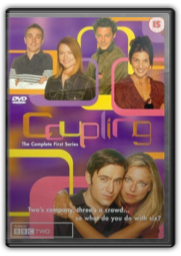
Coupling is a witty, instantly addictive series that charts the tangled sex lives of a close-knit group comprising "exes and best friends": womaniser Jack, hapless nice guy Steve, "strange and disturbing" Jeff, uninhibited Susan, neurotic Sally and manipulative Jane. The obvious frame of reference is Friends (Steve and Susan are the Ross and Rachel equivalent), but this series also echoes Seinfeld in its coinage of catchphrases and plot lines (in episode one, Steve tries to dump Jane, who refuses to accept). But it's no mere British clone of US sitcoms: Coupling has its own fresh and provocative take on relationships. At one point, a furious Susan discovers that Patrick not only had a videotape of the former couple having sex, but that he also taped over her. —Donald Liebenson 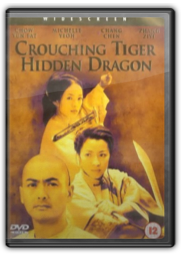
Crouching Tiger Hidden Dragon is so many things: an historical epic on a grand scale, an Asian martial-arts flick with both great effects and fantastic fighting (choreographed by The Matrix's guru Yuen Wo Ping), a story of magic, revenge and power played with a posse of star-crossed lovers thrown in for good measure. Set during the Qing dynasty (the late 19th century), the film follows the fortunes of righteous warriors Li Mu Bai and Yu Shu Lien (Asian superstars Chow Yun-Fat and Michelle Yeoh, respectively) whose love for one another has lain too long unspoken. When Li Mu Bai's legendary sword Green Destiny is stolen by wilful aristocrat's daughter Jen (exquisite newcomer Zhang Ziyi), who has been trained in the way of the gangster by Li Mu Bai's arch-rival Jade Fox, the warriors must fight to recover the mystical blade. The plot takes us all across China, from dens of iniquity and sumptuous palaces to the stark plains of the Western desert. Characters chase each other up walls and across roof and treetops to breathtaking effect, and Tan Dun's haunting, Oscar-winning East-West inflected score. 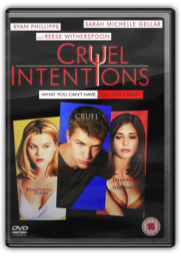
This modern-day teen update of Les Liaisons Dangereuses suffered at the hands of both critics and moviegoers thanks to its sumptuous ad campaign, which hyped the film as an arch, highly sexual, faux-serious drama (not unlike the successful, Oscar-nominated Dangerous Liaisons). In fact, Cruel Intentions plays like high comedy for its first two-thirds, as its two evil heroes, rich stepsiblings Kathryn (Sarah Michelle Gellar) and Sebastian (Ryan Phillippe), blithely ruin lives and reputations with hearts as black as coal. 
If you're a fan of brooding comic-book anti-heroes, got a nihilistic jolt from The Crow (1994) and share director Alex Proyas's highly developed preoccupation for style over substance, you might be tempted to call Dark City an instant classic of visual imagination. It's one of those films that exists in a world purely of its own making, setting its own rules and playing by them fairly, so that even its derivative elements (and there are quite a few) acquire their own specific uniqueness. Before long, however, the film becomes interesting only as a triumph of production design. And while that's certainly enough to grab your attention (Blade Runner is considered a classic, after all), it's painfully clear that Dark City has precious little heart and soul. One-dimensional characters are no match for the film's abundance of retro-futuristic style, so it's best to admire the latter on its own splendidly cinematic terms. Trivia buffs will be interested to know that the film's 50-plussets (partially inspired by German expressionism) were built at the Fox Film Studios in Sydney, Australia, home base of director Alex Proyas and producer Andrew Mason. The underground world depicted in the film required the largest indoor set ever built in Australia. —Jeff Shannon 
The Dark Knight arrives with tremendous hype (best superhero movie ever? posthumous Oscar for Heath Ledger?), and incredibly, it lives up to all of it. But calling it the best superhero movie ever seems like faint praise, since part of what makes the movie great—in addition to pitch-perfect casting, outstanding writing, and a compelling vision—is that it bypasses the normal fantasy element of the superhero genre and makes it all terrifyingly real. Harvey Dent (Aaron Eckhart) is Gotham City's new district attorney, charged with cleaning up the crime rings that have paralysed the city. He enters an uneasy alliance with the young police lieutenant, Jim Gordon (Gary Oldman), and Batman (Christian Bale), the caped vigilante who seems to trust only Gordon—and whom only Gordon seems to trust. They make progress until a psychotic and deadly new player enters the game: the Joker (Heath Ledger), who offers the crime bosses a solution—kill the Batman. Further complicating matters is that Dent is now dating Rachel Dawes (Maggie Gyllenhaal, after Katie Holmes turned down the chance to reprise her role), the longtime love of Batman's alter ego, Bruce Wayne. 
Supreme silliness doesn't stop The Day After Tomorrow from being lots of fun for connoisseurs of epic-scale disaster flicks. After the blockbuster profits of Independence Day and Godzilla, you can't blame director Roland Emmerich for using global warming as a politically correct excuse for destroying most of the northern hemisphere. Like most of Emmerich's films, this one emphasises special effects over such lesser priorities as well-drawn characters and plausible plotting, and his dialogue (cowritten by Jeffrey Nachmanoff) is so laughably trite that it could be entirely eliminated without harming the movie. It's the spectacle that's important here, not the lame, recycled plot about father and son (Dennis Quaid, Jake Gyllenhaal) who endure an end-of-the-world scenario caused by the effects of global warming. So sit back, relax and enjoy the awesome visions of tornado-ravaged Los Angeles, blizzards in New Delhi, Japan pummelled by grapefruit-sized hailstones, and Manhattan flooded by swelling oceans and then frozen by the onset of a modern ice age. It's all wildly impressive, and Emmerich obviously doesn't care if the science is flimsy, so why should you? —Jeff Shannon 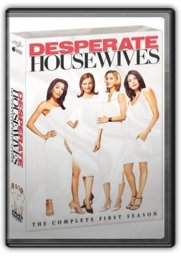
Audiences were captivated by the women of Wisteria Lane in the first season of Desperate Housewives, the breakout hit from ABC that almost single-handedly lifted the network from its ratings doldrums and brought back the classic TV soap, remixed now with satire, comedy, and mystery. An affectionate yet darkly tinged send-up of suburbia that skirted Twin Peaks territory as much as that of Knots Landing, Desperate Housewives opened with a bang—literally—as perfect-seeming housewife Mary Alice Young (Brenda Strong) went through her picture-perfect day before putting a handgun to her temple and pulling the trigger. Mary Alice's sudden suicide leaves her four closest friends, all housewives of a sort, with a surfeit of grief, a re-examination of their own lives, and a mystery to solve. It also proves to be a catalyst for a seamy study of what goes on inside the finely appointed homes of Wisteria Lane—the tales of which Mary Alice narrates from beyond the grave with a sardonic tone dipped in both honey and arsenic. 
This clever, funny big-screen adaptation of Lauren Weisberger's best-seller takes some of the snarky bite out of the chick lit book, but smoothes out the characters' boxy edges to make a more satisfying movie. There's no doubt The Devil Wears Prada belongs to Meryl Streep, who turns in an Oscar-worthy (seriously!) strut as the monster editor-in-chief of Runway, an elite fashion magazine full of size-0, impossibly well-dressed plebes. This makes new second-assistant Andrea (Anne Hathaway), who's smart but an unacceptable size 6, stick out like a sore thumb. Streep has a ball sending her new slave on any whimsical errand, whether it's finding the seventh (unpublished) Harry Potter book or knowing what type she means when she wants "skirts." Though Andrea thumbs her nose at the shallow world of fashion (she's only doing the job to open doors to a position at The New Yorker someday), she finds herself dually disgusted yet seduced by the perks of the fast life. The film sends a basic message: Make work your priority, and you'll be rich and powerful... and lonely. Any other actress would have turned Miranda into a scenery-chewing Cruella, but Streep's underplayed, brilliant comic timing make her a fascinating, unapologetic character. Adding frills to the movie's fun are Stanley Tucci as Streep's second-in-command, Emily Blunt (My Summer of Love) as the overworked first assistant, Simon Baker as a sexy writer, and breathtaking couture designs any reader of Vogue would salivate over. — Ellen A. Kim 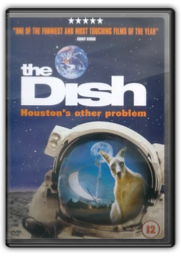
When released in 2000, The Dish achieved the highest opening gross in its native Australia, a testament to the country's pride in its home-grown movies. Concentrating on that legendary day in July 1969 when Neil Armstrong set foot on the Moon The Dish looks at the small but crucial role of the Parkes satellite receiver, without which the world would never have seen the historic landing. Sam Neill is the pipe-smoking "Dish Master" Cliff, whose team includes Dish mover "Mitch", distractedly love-struck electronics nerd Glenn and NASA representative Al. 
Arguably the greatest black comedy ever made, Stanley Kubrick's cold war classic is the ultimate satire of the nuclear age. Dr. Strangelove is a perfect spoof of political and military insanity, beginning when General Jack D. Ripper (Sterling Hayden), a maniacal warrior obsessed with "the purity of precious bodily fluids," mounts his singular campaign against Communism by ordering a squadron of B-52 bombers to attack the Soviet Union. The Soviets counter the threat with a so-called "Doomsday Device," and the world hangs in the balance while the US president (Peter Sellers) engages in hilarious hot-line negotiations with his Soviet counterpart. Sellers also plays a British military attaché and the mad bomb-maker Dr. Strangelove; George C. Scott is outrageously frantic as General Buck Turgidson, whose presidential advice consists mainly of panic and statistics about "acceptable losses." With dialogue ("You can't fight here! This is the war room!") and images (Slim Pickens' character riding the bomb to oblivion) that have become a part of our cultural vocabulary, Kubrick's film regularly appears on critics' lists of the all-time best. —Jeff Shannon, Amazon.com —This text refers to another version of this video. 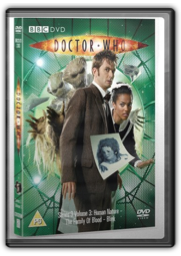
Among the very finest episodes broadcast since Doctor Who returned to our screens in 2005, this collection of "Human Nature", "The Family Of Blood" and "Blink" surely adds up to the best single DVD release of the show to date. 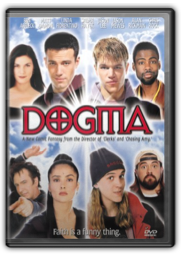
Bored of being eternally banished to earth, two errant angels hatch a plan to sneak back into heaven. Unfortunately, if they use the required loophole in religious Dogma, they'll prove God fallible and undo the very fabric of the universe, ending all existence. Bummer. Enter the distant grand niece of Jesus Christ and an army of angels, beautiful mythical figures, saintly apostles and all entities good and holy. And Jay and Silent Bob. 
Donnie Darko is a thought-provoking, touching and distinctive offering from relative newcomer, Richard Kelly (II). It's 1988 in small-town America and Donnie, a disturbed teenager on medication and undergoing psychoanalysis for his blackouts and personality disorders, is being visited by a being in a rabbit suit whom he calls Frank. It's this anti-Harvey that saves Donnie from being crushed to death when an airplane engine falls from the sky onto his house. This is the beginning of their escalating relationship, which, as Donnie follows Frank's instructions, becomes increasingly violent and destructive. Added to this is Frank's warning of the impending apocalypse and Donnie's realisation that he can manipulate time, leading to a startling denouement where nearly everything becomes clear. 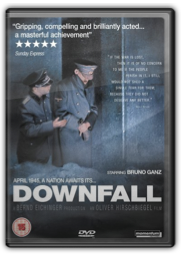
The riveting subject of Downfall is nothing less than the disintegration of Adolph Hitler in mind, body, and soul. A 2005 Academy Award nominee for best foreign language film, this German historical drama stars Bruno Ganz as Hitler, whose psychic meltdown is depicted in sobering detail, suggesting a fallen, pathetic dictator on the verge on insanity, resorting to suicide (along with Eva Braun and Joseph and Magda Goebbels) as his Nazi empire burns amidst chaos in mid-1945. While staging most of the film in the claustrophobic bunker where Hitler spent his final days, director Oliver Hirschbiegel dares to show the gentler human side of der Fuehrer, as opposed to the pure embodiment of evil so familiar from many other Nazi-era dramas. This balanced portrayal does not inspire sympathy, however: We simply see the complexity of Hitler's character in the greater context of his inevitable downfall, and a more realistic (and therefore more horrifying) biographical portrait of madness on both epic and intimate scales. By ending with a chilling clip from the 2002 documentary Blind Spot: Hitler's Secretary, this unforgettable film gains another dimension of sobering authenticity. —Jeff Shannon, Amazon.com 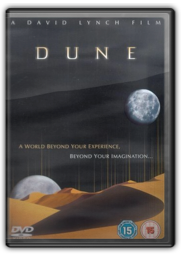
David Lynch's Dune is the brilliant but fatally flawed would-be epic feature film version of Frank Herbert's novel of the same name, the bestselling science fiction novel ever written. It is a complex but too heavily simplified version of a far more elaborate book, a darkly Gothic far future space opera revolving around an imperial, dynastic power struggle on the desert planet of Arrakis. With what was in 1984 an enormous $40 million budget, Lynch retained a surprising amount of the industrial/Victorian feel of his previous features, Eraserhead (1976) and The Elephant Man (1980), and was able to bring to the screen some of the most imaginative and awe-inspiring production designs, costumes and action then seen. Indeed, as a spectacularly atmospheric vision of the future Dune has as much to recommend it as the far more celebrated Blade Runner (1982), with which it even shares the female romantic lead, Sean Young—here just one star in a superb cast. The problem, which an unauthorised extended TV version failed to fix, is that Lynch's original vision of Dune was massively cut for length, and as such the final third is so rapidly paced as to undermine the superb first two thirds. A director's cut is sorely needed, the cinema version playing like a butchered masterpiece. Also available is an entirely unconnected four-and-a-half-hour mini-series, Frank Herbert's Dune (2000), which is less visionary but more coherent. 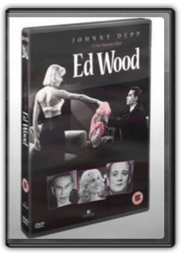
The significance of Ed Wood, both man and movie, on the career of Tim Burton cannot be emphasised enough. Here Burton regurgitates and pays homage to the influences of his youth, just as he would continue to do with Mars Attacks! and Sleepy Hollow. Everything is just right, from the decision to shoot in black and white, the performances of Johnny Depp (as Ed) and Martin Landau (as Bela Lugosi), the re-creation of 1950s Hollywood and the evocative score by Howard (Lord of the Rings) Shore. The plot struck a poignant familiar chord with Burton, who saw the relationship between the Ed and Lugosi mirroring his own with Vincent Price. Most importantly Burton responded to the story of the struggling, misunderstood artist. For all Burton's big-budget blockbusters (Batman, Planet of the Apes), he still somehow retains the mantle of the kooky niche director. And in the mid-90s, this film actually represented the last vestiges of his independent film production. Fans can only hope he'll soon return to those roots soon. 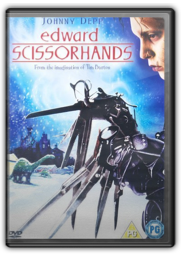
Edward Scissorhands achieves the nearly impossible feat of capturing the delicate flavour of a fable or fairy tale in a live-action movie. The story follows a young man named Edward (Johnny Depp), who was created by an inventor (Vincent Price, in one of his last roles) who died before he could give the poor creature a pair of human hands. Edward lives alone in a ruined Gothic castle that just happens to be perched above a pastel-coloured suburb inhabited by breadwinning husbands and frustrated housewives straight out of the 1950s. One day, Peg (Dianne Wiest), the local Avon lady, comes calling. Finding Edward alone, she kindly invites him to come home with her, where she hopes to help him with his pasty complexion and those nasty nicks he's given himself with his razor-sharp fingers. Soon Edward's skill with topiary sculpture and hair design make him popular in the neighbourhood—but the mood turns just as swiftly against the outsider when he starts to feel his own desires, particularly for Peg's daughter Kim (Winona Ryder). Most of director Tim Burton's movies (such as Pee Wee's Big Adventure, Beetlejuice and Batman) are visual spectacles with elements of fantasy but Edward Scissorhands is more tender and personal than the others. Edward's wild black hair is much like Burton's, suggesting that the character represents the director's own feelings of estrangement and co-option. Johnny Depp, making his first successful leap from TV to film, captures Edward's child-like vulnerability even while his physical posture evokes horror icons like the vampire in Nosferatu and the sleepwalker in The Cabinet of Dr. Caligari. Classic horror films, at their heart, feel a deep sympathy for the monsters they portray; simply and affectingly, Edward Scissorhands lays that heart bare. —Bret Fetzer 
Codebreaking is an inherently fascinating but not especially cinematic endeavour, which is why Enigma spices up the true story of Bletchley Park and its eclectic group of Nazi code-cracking geniuses with some fictional romance and intrigue. Dougray Scott plays gaunt mathematician Tom Jericho, haunted by the spectre of his missing girlfriend Claire (self-consciously gorgeous Saffron Burrows). Tom turns to Claire's frumpy housemate Hester Wallace (dressed-down Kate Winslet) to help him find her, but their search unexpectedly reveals the presence of a spy at Bletchley Park. Matters are further complicated by an investigating secret service agent (imperturbable Jeremy Northam) and the hostility of Jericho's superiors. 
Screenwriters rarely develop a distinctive voice that can be recognized from movie to movie, but the ornate imagination of Charlie Kaufman (Being John Malkovich, Adaptation) has made him a unique and much-needed cinematic presence. In Eternal Sunshine of the Spotless Mind, a guy decides to have the memories of his ex-girlfriend erased after she's had him erased from her own memory—but midway through the procedure, he changes his mind and struggles to hang on to their experiences together. In other hands, the premise of memory-erasing would become a trashy science-fiction thriller; Kaufman, along with director Michel Gondry, spins this idea into a funny, sad, structurally complex, and simply enthralling love story that juggles morality, identity, and heartbreak with confident skill. The entire cast—Jim Carrey, Kate Winslet, Kirsten Dunst, Elijah Wood, Mark Ruffalo, Tom Wilkinson, and more—give superb performances, carefully pitched so that cleverness never trumps feeling. A great movie. —Bret Fetzer 
A lush retelling of the legend of King Arthur and the Knights of the Round Table, Excalibur is a dark and engrossing tale. Director John Boorman (Deliverance) masterfully handles the tale of the mythical sword Excalibur, and its passing from the wizard Merlin to the future king of England. Arthur pulls the famed sword from a stone and is destined to be crowned king. As the king embarks on a passionate love affair with Guenevere, an illegitimate son, and Merlin's designs on power, threaten Arthur's reign. The film is visually stunning and unflinching in its scenes of combat and black magic. Featuring an impressive supporting cast, including early work from the likes of Liam Neeson and Gabriel Byrne, Excalibur is an adaptation of the legend both faithful and bold. —Robert Lane 
Fantastic Four is a light-hearted and funny take on Marvel Comics' first family of superherodom. It begins when down-on-his-luck genius Reed Richards (Ioan Gruffudd) has to enlist the financial and intellectual help of former schoolmate and rival Victor Von Doom (Julian McMahon) in order to pursue outer-space research involving human DNA. Also on the trip are Reed's best friend, Ben Grimm (Michael Chiklis); his former lover, Sue Storm (Jessica Alba), who's now Doom's employee and love interest; and her hotshot-pilot brother, Johnny Storm (Chris Evans). Things don't go as planned, of course, and the quartet becomes blessed—or is it cursed?—with superhuman powers: flexibility, brute strength, invisibility and projecting force fields, and bursting into flame. Meanwhile, Doom himself is undergoing a transformation. 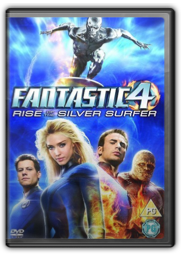
Offering a real improvement on its predecessor and successfully introducing one of the world of comics' most popular characters in the process, Fantastic Four: Rise Of The Silver Surfer easily warrants some attention on DVD to go with its impressive box office take. 
Leave it to the wildly inventive Coen brothers (Joel directs, Ethan produces, they both write) to concoct a fiendishly clever kidnap caper that's simultaneously a comedy of errors, a Midwestern satire, a taut suspense thriller, and a violent tale of criminal misfortune. It all begins when a hapless car salesman (played to perfection by William H. Macy) ineptly orchestrates the kidnapping of his own wife. The plan goes horribly awry in the hands of bumbling bad guys Steve Buscemi and Peter Stormare (one of them being described by a local girl as "kinda funny lookin'" and "not circumcised"), and the pregnant sheriff of Brainerd, Minnesota, (played exquisitely by Frances McDormand in an Oscar-winning role) is suddenly faced with a case of multiple murders. Her investigation is laced with offbeat observations about life in the rural hinterland of Minnesota and North Dakota, and Fargo embraces its local yokels with affectionate humor. At times shocking and hilarious, Fargo is utterly unique and distinctly American, bearing the unmistakable stamp of its inspired creators. —Jeff Shannon 
Field of Dreams is, in the words of its makers, a baseball film that "isn't about baseball". Rather, it's a magical film that works its spell on all but the most hard-boiled of viewers, an altogether superior slice of apple-pie sentimentality. Kevin Costner plays a young Iowa farmer who finds himself pestered by a whispering voice urging him, "If you build it, he will come". With the consent of an uncharacteristically supportive Hollywood wife (Amy Madigan) he sets about building a baseball diamond in the middle of his land. This action invites the prospect of bankruptcy—however, it also invites the spirit of "Shoeless" Joe Jackson, a baseball superstar disgraced following his role in the 1919 World Series scandal. The supernatural voices continue to urge Costner to "go the distance"—and he seeks out reclusive writer Thomas Mann (James Earl Jones) and "Doc" Graham (Burt Lancaster), impelled by purposes he is as yet unable to divine. Field of Dreams works because it touches so endearingly on themes of redemption, inner peace and the possibility of second chances—the "dreams" which elude most of us. It also cites baseball as an idyllic metaphor for all that is decent and constant about America. Costner gives immense plausibility to an utterly, deliberately implausible scenario. 
Ancient curses, all-powerful monsters, shape-changing assassins, scantily-clad stewardesses, laser battles, huge explosions, a perfect woman, a malcontent hero—what more can you ask of a big-budget science fiction movie? Luc Besson's high-octane film The Fifth Element incorporates presidents, rock stars and cab drivers into its peculiar plot, traversing worlds and encountering some pretty wild aliens. Bruce Willis stars as a down-and-out cabbie who must win the love of Leeloo (Milla Jovovich) to save Earth from destruction by Jean-Baptiste Emmanuel Zorg (Gary Oldman) and a dark, unearthly force that makes Darth Vader look like an Ewok. —Geoff Riley 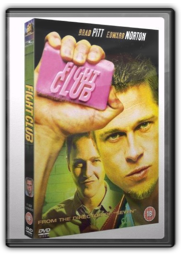
All films require a certain suspension of disbelief, Fight Club perhaps more than others; but if you're willing to let yourself get caught up in the anarchy, this film, based on the novel by Chuck Palahniuk, is a modern-day morality play warning of the decay of society. Edward Norton is the unnamed protagonist, a man going through life on cruise control, feeling nothing. To fill his hours, he begins attending support groups and 12-step meetings. True, he isn't actually afflicted with the problems, but he finds solace in the groups. This is destroyed, however, when he meets Marla (Helena Bonham Carter), also faking her way through groups. Spiralling back into insomnia, Norton finds his life is changed once again, by a chance encounter with Tyler Durden (Brad Pitt), whose forthright style and no-nonsense way of taking what he wants appeal to our narrator. Tyler and the protagonist find a new way to feel release: they fight. They fight each other, and then as others are attracted to their ways, they fight the men who come to join their newly formed Fight Club. Marla begins a destructive affair with Tyler, and things fly out of control, as Fight Club is transformed into a nationwide fascist group. 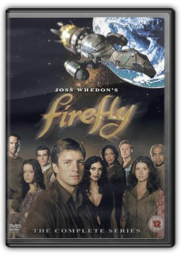
Much praised and much missed after its premature cancellation, Firefly is the first SF TV series to be conceived by Joss Whedon, creator of Buffy and cocreator of Angel. Set five centuries in the future, it is a show where the mysterious personal pasts of the crew of the tramp spaceship Serenity continually surface. In fact, it's a Western in space where the losers in a Civil War are heading out to a barren frontier. Mal Reynolds is a man embittered by the war, yet whose love of his comrades perpetually dents his cynicism—even in the 14 episodes that exist we see him warm to the bubbly young mechanic Kaylee, the preacher Book, the idealistic doctor Simon, even to the often demented River, Simon's sister, the psychic result of malign experiments. |

Mike Scott
Collection Total:
4362 Items
4362 Items
Last Updated:
May 7, 2009
May 7, 2009



 Made with Delicious Library